An image becomes a world
WMMLLM
Turning MLLMs into World Models
The first interactive world model built on multimodal large language models: persistent, editable worlds from a single image.
Lagoon Pier Island · saved panorama states of a prepared demo · nothing is generated while you browse
Drag to look around
Film
WMMLLM in one minute
One minute of the worlds on this page. Sound on.
Worlds
Explore generated worlds
Step inside. Look around. Change what happens next.
Loading the world list.
Requests
One world, many requests
Change the light. Bring in the weather. Walk somewhere new.
Generated videos of prepared requests. Choose one to try it in the world.
Watch the film
Generated videos from prepared requests.
Results
Return to the same view
WMMLLM completes 85.3% of the camera round trips on MBench-A; the six public world models complete 0.4% to 50.9%.
A round trip is complete when the camera turns at least 15° in the requested direction during the first half and returns within 10° of the start. All methods are scored on the same 224 items with the same MBench-A scorer.
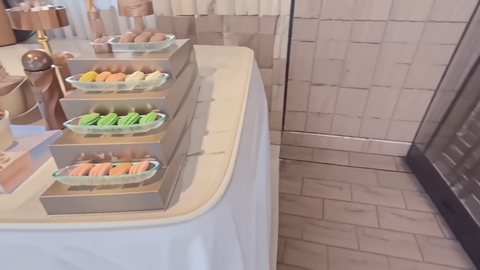
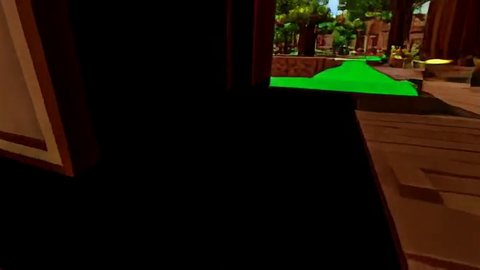
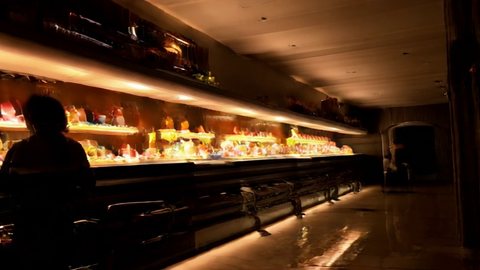
Two MBench-A camera round trips. Every method starts from the same image, turns away and is asked to come back. Switch between the first frame, a frame during the turn away and the last frame of each video.
Round trips completed
85.3%
Six public world models 0.4% to 50.9%
of 224 MBench-A items
Epipolar score
91.5
Six public world models 0.1 to 74.0
MBench-A environment recovery, mean score
Joint success
77.5%
Six public world models 0.0% to 32.5%
camera out and back, starting content shown, usable: a blind judge counts 31 of 40 videos against 0 to 13
Difference between revisits
0.037
Six public world models 0.32 to 0.66
median LPIPS, lower is closer
All numbers
The table loads with the page data.
How it works
MLLMs act on an explicit world state
Plan a request, propose a change, check it, and commit the new panorama. The video presents the transition.
One request, four steps
-
Plan
GPT-6.1-sol reads the request, the current view and an optional box, and returns operations in order. Each operation takes one route: rotate, revisit, local, global or walk.
-
Propose
For an edit, GPT-Image proposes the endpoint image at the editing view. Rotations and revisits render the saved state and call no image generator.
-
Select and check
The MLLM compares the source with the proposal and marks the region to write: the old and new footprints of the object and effects such as shadows. The proposal is blended inside this region, and the operation is aborted if any panorama pixel outside it changes.
-
Commit and present
A verifier compares the candidate with the request. A candidate that fails is retried once; a second failure keeps the current state. After a commit, Sol-H3 generates the transition video from the source and endpoint views. Video frames never enter the state.
Five routes change the state
-
rotate
Renders the current revision at a new orientation. No generator.
-
revisit
Reuses a saved view when its revision, camera and rendering profile match and the hashes agree. No generator.
-
local
Writes a GPT-Image proposal into the panorama inside the selected region only.
-
global
A change of lighting, weather or season replaces the panorama and retires earlier patches.
-
walk
Generates the destination panorama for a new place.
Full method figure and route table
Local edits
Edits stay local
A local edit leaves every pixel outside its region unchanged.
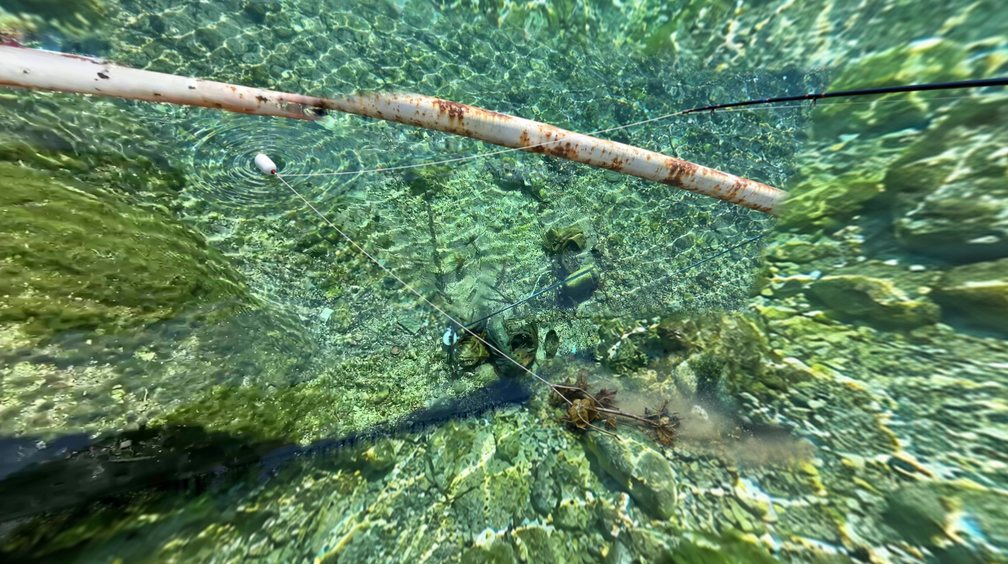
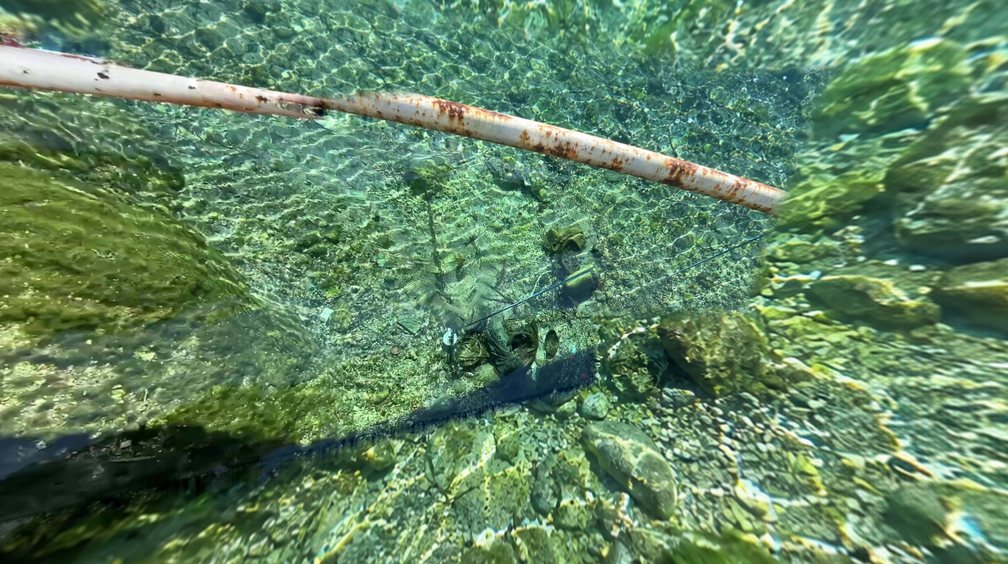
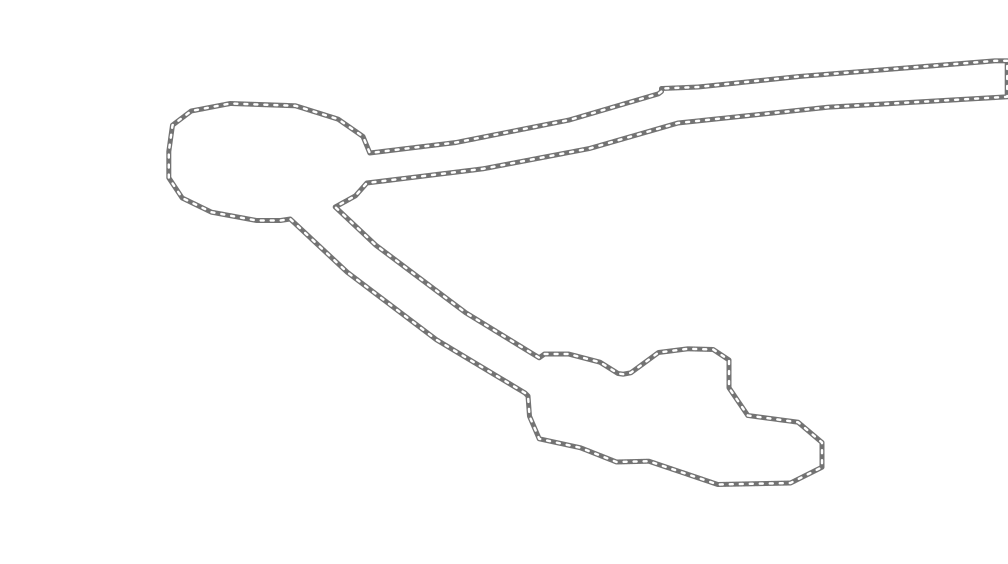 Source
WMMLLM
An MBench-A request adds a fishing rod that drags debris along a riverbed. Drag the divider to compare the source with the result.
Direct editing installs the whole GPT-Image proposal, which also adds a rock and shifts the texture of the whole frame. WMMLLM writes the proposal inside the selected region only.
Pixels changed outside the region
Share of the pixels outside the region that change by more than 16 intensity levels, for this request. Threshold paste copies every pixel whose color change exceeds a threshold.
In the audit of the benchmark run, all 97 local edits that pass the check leave every panorama pixel outside their region unchanged.
Region selected after generation
34.8% to 83.0%
completion in blind evaluation on 112 local edits, with the region predicted before generation and with the region selected after it; a difference of 48.2 points
CompBench image editing
15 of 15 columns
best value in every metric column against 15 baselines, on 2,709 GPT-Image proposals
Background preservation, PSNR in dB
| Group | WMMLLM | Best baseline |
|---|---|---|
| Local (n = 2,465 edits) | 30.440 | 27.692 |
| Multi-object (n = 144 edits) | 29.104 | 26.849 |
| Implicit reasoning (n = 100 edits) | 32.868 | 28.891 |
Questions
About the demo
What does not work yet
The main limitation is completing the action of a request reliably.
- Final endpoint rejections cause 276 of the 280 failure holds. A hold repeats the current view, so the motion in the request is missing.
- The endpoint check and the evaluation judge are models without human calibration, and frame samples cannot verify the motion between them.
- The world is a panorama around one center, so translation and regions that no view has shown require generation. The generation log flags a seam in 208 of the 227 environment items.
- Failures also arise from weak camera motion and from placements that miss the relation in the request.
Known issues
Known issues in Floating Airship Dock
Paper
WMMLLM: Turning MLLMs into World Models
Baiang Li, Enze Xie, Jincheng Yu, Jin Wang, Haozhe Liu, Yitong Li, Juanxi Tian, Felix Heide.
@article{li2026wmmllm,
  title   = {{WM}$^{\text{MLLM}}$: Turning {MLLMs} into World Models},
  author  = {Li, Baiang and Xie, Enze and Yu, Jincheng and Wang, Jin and Liu, Haozhe and Li, Yitong and Tian, Juanxi and Heide, Felix},
  journal = {arXiv preprint arXiv:2611.24193},
  year    = {2026}
}Refer to a state of this demo